

Why Has My Teenager Lost All Motivation? What Schools Don't Teach About Drive
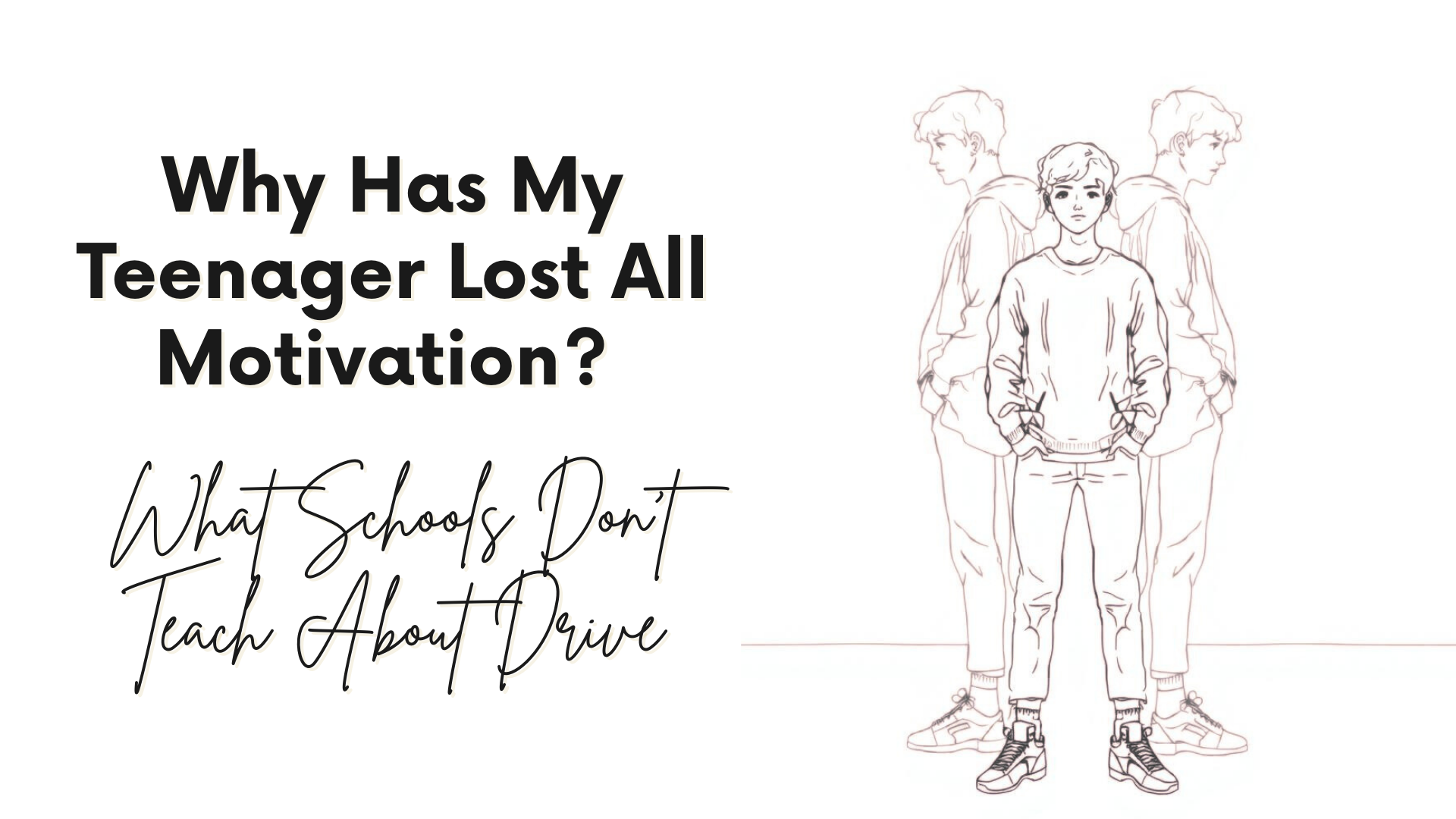
Your teenager used to be curious. Engaged. Alive.
Now they seem to care about nothing.
Grades are slipping. Friends don't matter. The future is a shrug. They drift through life like they're underwater - slow, detached, unreachable.
Teachers say "senioritis" or "it's just a phase." Friends suggest "tough love" or "let them fail - they'll learn."
You've tried everything: consequences, rewards, heart-to-heart talks. Nothing breaks through.
What nobody's telling you is this: what looks like lack of motivation is usually a natural developmental stage being shut down - or tension from not being allowed to pursue what actually lights them up.
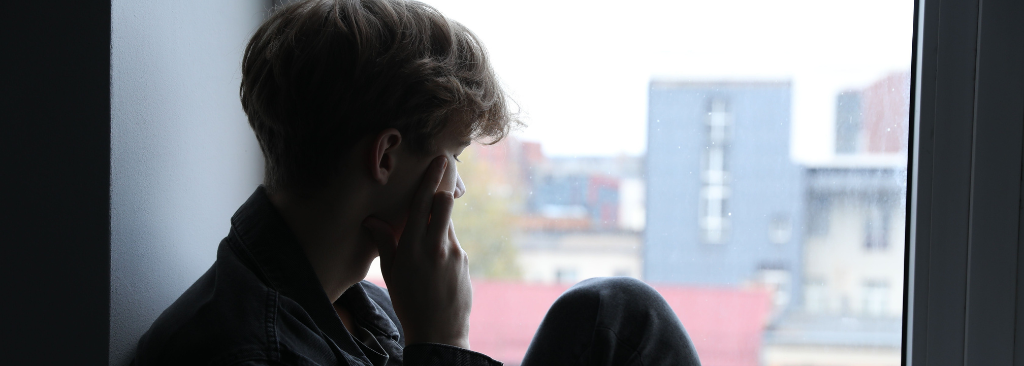
The Natural Stage Everyone Misunderstands
There's a stage in human development where a young person is meant to throw out everything they learned in childhood and formulate their own worldview.
This is not rebellion against you. It's growth.
Think about it like this: a baby doesn't "give up" breastmilk as an act of defiance. A toddler doesn't "rebel against" crawling because they're angry at their parents. They move on because the next stage requires it.
The same happens in adolescence.
Your teenager developed a way of being in the world - a personality - that helped them get more of what they wanted from you and their caregivers in childhood. Those traits helped them navigate family life.
But those same traits won't necessarily help them get what they want out of life outside your home.
Teenage years - puberty - is the time when a young person is meant to throw it all out and begin reinventing themselves as an adult. They need to test different ways of being, make mistakes, find boundaries, discover what works and what doesn't outside the family environment.
And of course, they bring this "testing" home with them.
When you see it for what it is - a natural stage, like learning to walk - you can be with them through it, even as they question everything you taught them and often do the opposite.
When a toddler is learning to walk, everyone is encouraging. Nobody worries about them stumbling and falling over and over again. Nobody takes it personally that they were so good at sitting and crawling and now they're throwing all that away to do something they're terrible at.
Nobody says "why would you do that?"
They just accept it. It's normal.
Drawing this analogy to teenage behavior helps you realize: they're not rejecting you. They're moving on from structures that served them in family life to structures that serve them better as they go out into the wide world.
If they want something different from life than you aimed for, they're likely to find ways of behaving and navigating the world that are very different from what's expected or accepted in your family.
This is healthy. This is growth.
When we take it personally and try to hold them to childhood patterns, we get in the way of their natural development.

When Dreams Get Killed
There's another reason teenagers disengage: tension from not being allowed to pursue what actually lights them up.
Let me show you what this looks like.
Story #1
A 16-year-old girl was excitedly telling her mum how she wanted to work with animals. She described a farm she wanted to create, where people could come - kids, families, school groups - to spend time with her animals. At the end of her 10-minute excited description, she asked "Do you think I could do that mum?"
The mum said "No, I don't think so. It wouldn't make any money. You're better off becoming a vet."
The look on the girl's face said it all. Her dreams just got shattered.
Even if she goes on to become a vet, she will always know it wasn't what she really wanted. She'll be dissatisfied and unfulfilled, even if she becomes successful.
Story #2
I was surfing the other day and there was a surf school nearby, the lesson just finishing. A young boy of about 10 was telling his mum how the lesson went. He excitedly shared that he did so well that they said next term he could start teaching some of the other kids. He immediately went into what 10-year-olds do - the far-off dream.
"Maybe I could get really good and set a world record! Do you think I could get a world record mum?"
"No, I don't think so, son," the mother replied.
It was the saddest thing to hear. She seemed like a very caring mum, trying to save her son from unnecessary pain. But to not let someone dream is how disengagement and despondency begins.
Story #3
A 17-year-old I spoke with was telling me he didn't know what he wanted to do. I said "I think you do, you just don't think you can do it."
He admitted that he was really into music and creating different sounds. He noticed how different frequencies made him feel differently, and wanted to explore that and share it with others.
But his father was an engineer and his mother a teacher, and he didn't feel they would approve of this vague career choice. He never even thought to ask them or tell them about it. He made an assumption based on what he thought his parents' views were.
This created tension within him as he looked for other "acceptable" career paths and nothing really appealed to him.

Why They Turn to Screens
Disengagement and despondency usually lead to screens - it's a way of numbing out.
Why are they numbing out? What are they numbing out from?
Tension.
They want to avoid feeling tension. Tension is a normal part of life, but they don't know how to handle it, don't know that it's normal, and don't know what to do with it.
One type of tension is the tension they feel when they don't think they can or are allowed to pursue their real interests in life. They become despondent when they've been told that they can't or shouldn't do what they want to do. They go into the "why bother?" attitude.
I knew a young teenager who suddenly started playing online games obsessively, locked himself in a dark room and rarely came out. I intuitively felt that he was dealing with some emotions that he didn't know what to do with. He was just entering his teens, so his hormones would be all over the place, with testosterone levels rising. He had always been a "good kid."
I guessed that he was having some feelings that he didn't know what to do with, and that didn't feel like "him."
So I just said to him "It's OK for you to hate your parents right now. It's normal. They're grown up, don't worry about them, they can handle it."
I spoke to the parents and told them what I thought was going on and suggested that they let him lash out if that happens. Over a period of 2 weeks his gaming reduced to almost none and he was spending time with his family again. Yes, he had a sour look on his face at some meals, but the parents knew this was a normal part of his growing up and brought no attention to it.
As the hormone mix changes in a young teen body, they experience things they've never experienced before and may wonder what's wrong with them - and some will choose to hide rather than unleash this strange version of themselves onto the world.
What You Can Actually Do
See Them as Powerful
A mum came to me with a problem of her 13-year-old son distancing himself from her, spending more time in his room, and not wanting to do anything.
I said to her "What if you see him as powerful?"
I suggested she assume that he knows exactly what he's doing and that he is finding his way.
Within a few weeks she reported that everything changed. She realized how much she was trying to hold onto him as a child and was not seeing him as an emerging adult. Once she gave him the space to do what he needed to do and stopped her unconscious questioning, pushing and expectations of how things should be - he felt the change in her energy and started talking with her more than ever before.
Ask Questions Instead of Giving Answers
It's not about giving kids "false hope." It's about realizing that their energy comes from their dreams and imagination.
"How far could I take this?" is a young person's natural way of being and thinking about things.
When we as adults overlay our own life experience onto them, telling them that "it doesn't work that way" or "it's not going to make money or get you anywhere," we're depriving them of that youthful energy.
Sharing wisdom is different. Sharing wisdom is about asking questions, not giving answers or telling them "how it is."
How do we know? They're not us. Maybe they'll have a different experience.
If someone isn't naturally good at something or if a pursuit is more of a hobby than an income-producing activity, it's better for them to realize it for themselves than to kill their vision to protect them from disappointment.
You can't protect them from disappointment no matter what you do - it's a necessary part of life's learning cycle.
By shutting down their dreams, you're telling them that they're not powerful, that you don't believe in them and that they're not free to explore what lights them up.
Give Them Space to Find Their Way
When you understand that teenage "rebellion" is actually a natural developmental stage - like learning to walk - you stop taking it personally.
They're not rejecting you. They're testing what works in the wider world.
When you give them space to do this, to stumble and fall and get back up, you become a guide instead of an obstacle.
The Good News
Any gaps in the 7 foundational capacities don't matter because they can be either filled or bypassed once you have awareness of what's going on under the surface.
By the time they're teenagers, when they can understand what's going on, they take care of it themselves if they choose to.
Your job isn't to fix them or push them or protect them from disappointment.
Your job is to see them as powerful, give them space to find their way, and ask questions instead of overlaying your experience onto their future.

Want the complete framework?
Download the 7 Seeds of Success Guide and see how the 7 foundational capacities develop across a lifetime - and how to support them at every age without pressure, force, or taking their natural growth stages personally.
Your teenager isn't broken. They're growing.
And growth - real growth - always looks messy before it looks beautiful.
Download the 7 Seeds Guide → https://wisdomeducation.org/more
